
Why Choose Diploma in Physiotherapy? Scope, Skills, and Career Options
Introduction
In today’s fast-moving and sedentary lifestyle, musculoskeletal problems, sports injuries, neurological issues, and post-operative rehabilitation have become common. This has created a high demand for qualified physiotherapy professionals who can provide non-invasive, drug-free, and effective treatments to restore movement, reduce pain, and improve the quality of life.
If you are looking for a healthcare career that combines science, hands-on skills, patient care, and job satisfaction, then Diploma in Physiotherapy (DPT) is an excellent choice for you. Let’s explore why you should choose Diploma in Physiotherapy, what skills it offers, and what are the career options after completing it.
✅ What is Diploma in Physiotherapy?
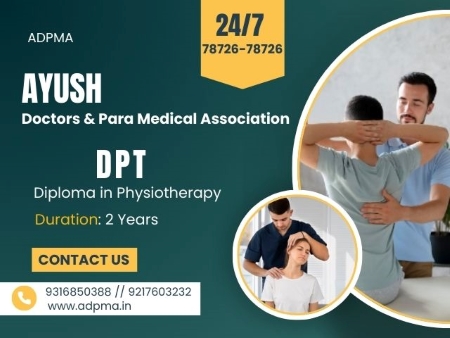
Diploma in Physiotherapy (DPT) is a 2-year professional course designed to train students in:
Human anatomy and physiology related to movement
Basics of physiotherapy techniques and modalities
Therapeutic exercises and manual therapy
Rehabilitation techniques for various conditions
Patient assessment, treatment planning, and care
The course combines theoretical knowledge with practical training to prepare students as competent physiotherapy assistants or technicians in hospitals and clinics.
🌟 Top Reasons to Choose Diploma in Physiotherapy
1. Rising Demand for Physiotherapists
With increasing lifestyle diseases, sports injuries, and awareness about physical fitness, physiotherapy services are in high demand across hospitals, rehabilitation centres, sports teams, elderly care centres, and private clinics.
Choosing DPT ensures good job opportunities with job security and professional growth.
2. Short Duration, Long-Term Benefits
Compared to full degrees, a diploma course is shorter (2 years) and cost-effective. Within a short duration, you gain employable skills and practical exposure to start working and earning early.
3. Opportunity to Help and Heal People
Physiotherapy is a noble profession where you help patients recover from:
✔️ Stroke or paralysis
✔️ Orthopaedic injuries (fractures, ligament tears)
✔️ Post-operative conditions
✔️ Neurological disorders (Parkinson’s, cerebral palsy)
✔️ Sports injuries
✔️ Back pain, neck pain, arthritis
You become a part of their healing journey, improving their mobility, independence, and life quality.
4. Diverse Work Settings
After DPT, you can work in:
Government and private hospitals
Orthopaedic and rehabilitation centres
Physiotherapy clinics
Sports teams and fitness centres
NGOs and community health programs
Home care services
This variety offers flexibility to choose your preferred work environment.
5. Pathway to Further Studies
Diploma in Physiotherapy is an excellent foundation if you plan to pursue:
✅ BPT (Bachelor in Physiotherapy)
✅ Specialisation courses in sports physiotherapy, neuro physiotherapy, geriatric care
✅ Certification programs in manual therapy, taping, ergonomics, etc.
Further studies enhance your qualifications and open senior-level opportunities.
🌟 Top Skills You Gain with Diploma in Physiotherapy
1. Assessment and Diagnosis Skills
You learn to:
✔️ Evaluate patient conditions through physical examination
✔️ Identify movement dysfunctions and limitations
✔️ Analyse posture, gait, and joint mobility
2. Therapeutic Exercise Planning
You gain expertise in:
Designing exercise programs for strengthening and flexibility
Teaching correct movement patterns
Modifying exercises as per patient progress
3. Hands-On Therapy Skills
You are trained in:
Manual therapy techniques
Soft tissue mobilisation and stretching
Basic joint mobilisation methods
4. Use of Electrotherapy Modalities
You learn to operate and apply:
Ultrasound therapy
TENS (Transcutaneous Electrical Nerve Stimulation)
IFT (Interferential Therapy)
Heat and cold therapy
5. Patient Care and Communication Skills
Effective physiotherapists are empathetic communicators. You will develop:
Patient education skills
Counselling techniques to motivate adherence to treatment
Professional ethics and bedside manners
🌟 Career Options After Diploma in Physiotherapy
1. Physiotherapy Assistant / Technician
Assist physiotherapists in hospitals, clinics, and rehabilitation centres in treating patients, managing therapy sessions, and maintaining equipment.
2. Independent Practice (with Experience)
With adequate experience and registration (where applicable), you can open your own physiotherapy clinic offering general rehab services under a qualified physiotherapist’s guidance.
3. Sports Physiotherapy Assistant
Work with sports teams, fitness centres, and gyms to manage injuries, rehabilitation, and preventive physiotherapy programs.
4. Home Care Physiotherapy
Provide therapy to patients who cannot visit clinics – elderly, paralysed, or post-operative cases requiring home-based rehabilitation.
5. NGO and Community Health Worker
Work in community health programs, NGOs, and old-age homes, providing rehabilitation and mobility assistance to underprivileged or elderly populations.
6. Higher Studies and Teaching
After further studies like BPT, you can move into teaching roles in physiotherapy colleges or become a senior therapist in multispecialty hospitals.
🏆 Final Thoughts
Diploma in Physiotherapy (DPT) offers you a rewarding career combining science, compassion, and patient care. You gain practical skills that are in high demand globally and become a key contributor to people’s health and mobility.
If you wish to build a future in healthcare where you can make a real difference in patients’ lives while enjoying job stability and professional respect, choosing Diploma in Physiotherapy is your first step towards success.
👉 Begin your physiotherapy journey today and become a skilled professional ready to heal, help, and inspire.
🔗 For admissions and course details, visit: www.adpma.in
📧 Email us at: adpma2001@gmail.com
📞 Contact our helpline: 78726-78726